土地
土earth地land=land or soil
A mound rising from the ground line — that's earth!
Practice 土 in the interactive lesson土 is a heap of earth — a horizontal ground line with a stroke rising up from it, like a small hill of soil. The farmer's world: solid ground beneath everything we build and grow.
Chinese words often combine short meaning clues. Fixed expressions are clearly marked so you do not translate them too literally.
土 is documented as a basic character form. Its earlier written forms gradually became the regular-script shape used today.
In modern simplified Chinese, 土 is written with 3 strokes. This lesson separates documented shape history from the memory story so learners do not mistake a mnemonic for a historical claim. 土 works as one complete form rather than a puzzle made from smaller modern components. Learning its overall silhouette is useful because the same shape may later appear inside more complex characters.
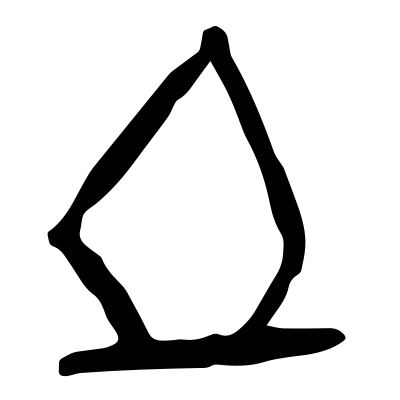
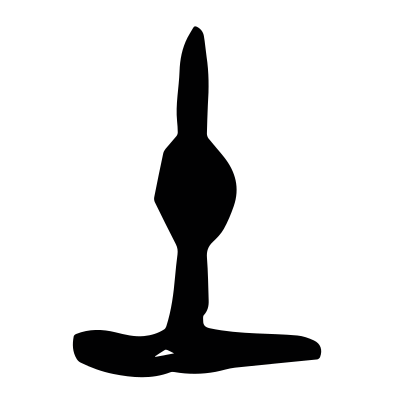
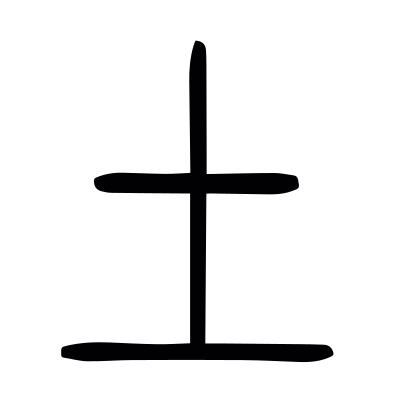
土 is written with 3 strokes. Learn the complete stroke sequence in the interactive lesson, then write the character from memory before checking your answer.
The examples below show 土 in complete beginner-friendly sentences. Read each sentence aloud, notice where the character appears, and then replace one noun or number to create a new sentence of your own.
Learn the reading as one unit: tǔ, with the third tone: falling then rising. Avoid memorizing the letters without the tone mark. Say the syllable, recall the English meaning “earth, soil,” and write the 3 strokes from memory.
Because 土 is a basic form, focus on its proportions and stroke direction. Compare it with 地 (dì, ground — earth (土) + also (也)); 坐 (zuò, sit — two (人) on earth (土)); 里 (lǐ, inside — field (田) + earth (土)). Similar characters are easier to remember when their different parts and meanings are studied side by side.
Compare this character with related beginner words. A themed path helps you notice useful pairs, word-building patterns, and everyday contexts.
Use the Chinese radicals and components guide to understand reusable parts, the stroke order guide to improve handwriting, and the HSK 1 character overview to choose your next beginner lesson.
HanziStory separates documented character history from modern memory stories. Historical-form images are shown only when a matching source file is available; missing stages are skipped rather than invented. Stroke practice uses HanziWriter data.
Last updated: August 12, 2026. Read our sources, editorial method, and correction policy.